

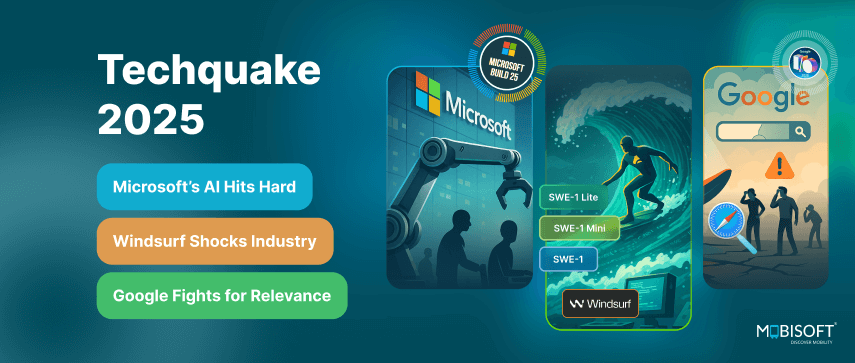
Techquake: Today’s Innovations Reshaping Tomorrow
Introduction
Ever feel like you’re standing on shifting ground? That’s probably because you are, at least in the technological sense. We’re living through a bona fide “Techquake” – a period of rapid, often disruptive innovation that’s reshaping our lives faster than ever before. Forget incremental changes; we’re talking tectonic shifts in how we work, play, communicate, and even think.
But what does this Techquake really *mean* for us, both in the short-term whirlwind and the long-term horizon? And more importantly, how can we not just survive, but thrive, amidst all this technological upheaval? Let’s dive in, not with panic, but with a healthy dose of curiosity and a strategy for navigating the future.
The Immediate Tremors: What We’re Feeling Now
Right now, the aftershocks of this Techquake are all around us. Think about your daily routine. AI is already subtly influencing what news you see, what products are recommended to you, and even how you navigate traffic. Remote work, fueled by cloud computing and collaboration tools, has blurred the lines between office and home, offering flexibility but also presenting new challenges for work-life balance.
The immediate impact on the job market is undeniable. While some roles are becoming obsolete, new ones are emerging, demanding a shift in skillset and a constant willingness to learn. Think of the rise of prompt engineers, data scientists specializing in AI ethics, and cybersecurity specialists. The skills of yesterday are no longer enough to secure the jobs of tomorrow.
On a more personal level, we’re grappling with issues like digital privacy, the spread of misinformation, and the potential for technology to exacerbate existing inequalities. We are constantly bombarded with notifications and information, struggling to maintain focus and navigate the digital landscape responsibly. These are immediate concerns that demand immediate attention.
Long-Term Fault Lines: The Future We’re Building
Looking further down the line, the Techquake promises – or threatens – even more profound transformations. Consider the potential of personalized medicine, powered by AI and genomics, to revolutionize healthcare, leading to earlier diagnoses, more effective treatments, and potentially even longer lifespans. Imagine cities powered by renewable energy, managed by smart grids, and populated by autonomous vehicles, drastically reducing our carbon footprint and transforming urban living.
But this long-term vision also comes with potential pitfalls. The increasing sophistication of AI raises ethical questions about bias, accountability, and the potential for misuse. The automation of labor could lead to widespread job displacement, requiring a fundamental rethinking of our economic systems and social safety nets. We need to address issues like algorithmic bias, ensure equitable access to technology, and prepare for the societal implications of a world increasingly shaped by automation.
Riding the Wave: Practical Solutions for a Tech-Driven World
So, how do we navigate this Techquake effectively? Here are some practical solutions and approaches to consider:
- Embrace Lifelong Learning: This isn’t just about taking a course or two. It’s about adopting a mindset of continuous learning and adaptation. Identify the skills that are becoming increasingly valuable (e.g., critical thinking, problem-solving, data analysis, AI literacy) and actively seek out opportunities to develop them. Online platforms like Coursera, edX, and Udemy offer a plethora of courses, often at affordable prices.
- Example: Sarah, a marketing professional, saw the increasing importance of data analytics. She enrolled in a part-time online course in data visualization and now uses those skills to create more effective marketing campaigns, making her more valuable to her company.
- Cultivate Adaptability and Resilience: The only constant is change. Develop your ability to adapt to new technologies, processes, and ways of working. This means being open to new ideas, embracing experimentation, and not being afraid to make mistakes.
- Example: John, a construction worker, initially resisted the introduction of new digital tools on his job site. However, by embracing training and learning how to use them, he not only improved his efficiency but also gained new skills that made him more competitive in the job market.
- Prioritize Digital Literacy and Critical Thinking: Learn how to discern credible information from misinformation online. Understand the biases that can exist in algorithms and be aware of the potential manipulation tactics used in digital marketing.
- Example: Teach younger generations how to critically evaluate online sources and understand the difference between factual information and opinion. Encourage them to question the information they encounter online and to seek out diverse perspectives.
- Advocate for Ethical Technology Development: Support initiatives that promote responsible AI development and deployment. This includes demanding transparency in algorithmic decision-making, advocating for policies that protect digital privacy, and holding companies accountable for the ethical implications of their technology.
- Example: Support organizations that are working to develop ethical guidelines for AI and advocate for policies that promote digital privacy and data security.
- Explore Alternative Career Paths: If your current job is at risk of being automated, start exploring alternative career paths that are less susceptible to automation or that require skills that are in high demand. Consider fields like healthcare, education, or the trades, which often require a combination of technical skills and human interaction.
- Example: A factory worker who sees increasing automation in his workplace might explore retraining programs in fields like robotics maintenance or programming.
Multiple Paths to Navigate the Techquake:
There’s no one-size-fits-all solution. Here are a few alternative approaches:
- The “Upskill and Specialize” Approach: Focus on developing specialized skills in a niche area of technology that is in high demand.
- The “Generalist with Tech Savvy” Approach: Cultivate a broad range of skills and knowledge across different domains, with a strong understanding of how technology can be applied to solve problems.
- The “Entrepreneurial Innovator” Approach: Use your knowledge of technology to create new products, services, or businesses that address unmet needs or solve real-world problems.
Conclusion: Embrace the Opportunity, Shape the Future
The Techquake is undoubtedly a period of significant change and uncertainty. But it’s also a period of immense opportunity. By embracing lifelong learning, cultivating adaptability, prioritizing digital literacy, advocating for ethical technology development, and exploring alternative career paths, we can navigate this technological upheaval and shape a future that is both innovative and equitable.
This isn’t just about surviving the Techquake; it’s about harnessing its energy to build a better world. It’s about using technology to solve some of the world’s most pressing challenges, from climate change to poverty to disease. It’s about creating a future where technology empowers individuals, strengthens communities, and promotes human flourishing.
So, let’s step forward with optimism, determination, and a commitment to shaping the Techquake in a way that benefits all of humanity. The future is not something that happens *to* us; it’s something we create, together.