

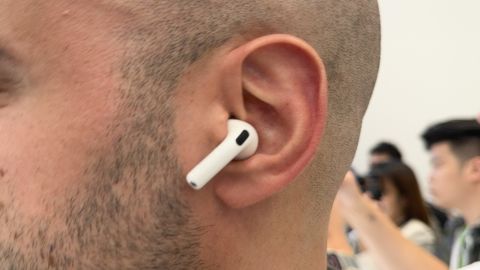
Apple has once again pushed the boundaries of consumer technology with its latest AirPods, which now function as both wireless earbuds and hearing aids. This dual-purpose device signifies a major step forward in the intersection of consumer tech and health technology, making hearing assistance more accessible and less stigmatized. With the growing popularity of wearable tech, Apple is capitalizing on its market dominance by creating a product that meets both entertainment and health needs.
This article explores how Apple’s new AirPods serve as hearing aids, the technology behind this innovation, and the potential impact on the hearing aid industry and consumers alike.
Bridging the Gap: AirPods as Hearing Aids
For years, Apple has positioned its AirPods as a premium wireless audio solution for music, calls, and interaction with Siri. With the introduction of features that address hearing impairments, the company is broadening the utility of the device, making it a multifunctional accessory that can assist those with mild to moderate hearing loss.
Apple’s AirPods have long had some accessibility features, like the Live Listen feature, which uses the AirPods as a sound amplifier by utilizing the iPhone’s microphone. This feature allowed users to hear conversations better in noisy environments or from across the room by amplifying sound directly into their ears. However, with the new AirPods, Apple has gone further, incorporating full-fledged hearing aid functionality. This transformation turns what was once a casual feature into a critical tool for millions of people with hearing loss.
By positioning AirPods as hearing aids, Apple taps into a huge potential market while offering users a discreet and fashionable solution to hearing loss. Traditional hearing aids are often seen as bulky and can carry social stigma. In contrast, AirPods are a familiar, trendy accessory that many people wear, so integrating hearing aid functionality into a product people already use daily could encourage more individuals to seek hearing assistance.
The Technology Behind AirPods as Hearing Aids
Apple’s new AirPods are powered by advanced algorithms and hardware enhancements that bring hearing aid capabilities to the next level. The incorporation of adaptive sound processing allows the AirPods to adjust to different sound environments, reducing background noise and enhancing the clarity of speech. This is crucial for users who need to hear conversations in challenging settings, such as restaurants or crowded spaces.
One key feature is Conversation Boost, which is designed to help people better hear conversations in noisy environments. Using beamforming microphones and sophisticated software, AirPods can focus on the voice of the person in front of the user, amplifying their speech while reducing surrounding noise. This feature mimics some of the most advanced features found in traditional hearing aids, making the AirPods a competitive option for those with hearing loss.
Additionally, the new Transparency Mode has been upgraded, allowing users to stay aware of their surroundings while simultaneously boosting important sounds, such as conversations. Apple has fine-tuned this mode to ensure that the sound of voices is crisp and clear, even in environments where there’s a lot of ambient noise.
Apple has also leveraged its H1 chip, a key component in AirPods, to enhance the processing speed required for real-time sound adjustments. The chip’s computational audio capabilities make it possible for AirPods to constantly adapt to the user’s environment and individual hearing needs. Through the Apple Health app, users can fine-tune the audio experience to better suit their unique hearing profile. For example, a user could personalize sound settings based on the results of a hearing test that can be conducted within the app, creating a customized hearing experience.
A New Approach to Hearing Aids
Apple’s foray into hearing aid technology is not only innovative but also strategic. The hearing aid market has been undergoing changes in recent years, with the Over-the-Counter Hearing Aid Act passed in 2017 in the U.S., which allows hearing aids to be sold without a prescription. This act was aimed at making hearing aids more accessible and affordable to millions of people with mild to moderate hearing loss. Apple’s AirPods fit neatly into this space, offering a solution that is both convenient and competitively priced compared to traditional hearing aids.
The affordability of AirPods, combined with their multifunctional use, gives Apple a competitive edge. Hearing aids can cost thousands of dollars, whereas AirPods are much more affordable, even at their premium price points. This could be a game-changer for people who need hearing assistance but have been deterred by the cost of traditional hearing aids.
Moreover, Apple is entering the hearing aid market at a time when the stigma around hearing loss is decreasing. In an era where more people are using wireless earbuds for various purposes, the lines between entertainment devices and health devices are blurring. Apple’s marketing and design philosophy—where technology and style meet—has the potential to make hearing aids cool, wearable, and desirable, much like the broader trend with smartwatches and fitness trackers.
Impact on the Hearing Aid Industry
Apple’s move into hearing aids with the AirPods could disrupt the traditional hearing aid industry, which has been dominated by a few major players. While these companies focus on providing specialized devices for hearing loss, their products have often been out of reach for many people due to high costs and limited availability. Apple’s introduction of hearing aid functionality into its mainstream, widely-available product could democratize hearing assistance.
However, traditional hearing aid companies may still hold an advantage when it comes to more severe hearing loss. Apple’s new AirPods are designed for mild to moderate hearing loss, and they lack some of the advanced features found in high-end hearing aids, such as long-term battery life or deep customization through professional audiologists. Still, for the millions of people with less severe hearing impairments, AirPods offer an attractive, affordable alternative.
The introduction of AirPods as hearing aids also highlights a broader trend toward hearing health technology that integrates seamlessly into everyday life. With Apple leading the charge, other tech companies may follow suit, leading to more innovation in the field of hearing technology. The combination of affordability, convenience, and style could lead to a wider adoption of hearing assistance tools across the board.
Looking Ahead: A Future of Multi-Functional Devices
Apple’s new AirPods are more than just a pair of wireless earbuds. They represent a shift toward multi-functional devices that enhance everyday life by serving both entertainment and health needs. As wearable technology continues to evolve, products like these will likely become commonplace, offering solutions to health problems in ways that are both practical and stylish.
For those with mild to moderate hearing loss, Apple’s AirPods offer a discreet, cost-effective, and highly functional alternative to traditional hearing aids. As the technology improves, we may see future iterations of AirPods with even more advanced hearing aid capabilities, helping to break down barriers and improve accessibility for all.
In the meantime, Apple’s new AirPods will undoubtedly appeal to a wide range of users—those looking for high-quality audio performance, those seeking better hearing assistance, and everyone in between. With this innovative blend of entertainment and health tech, Apple is once again setting the standard for what consumer technology can achieve.