

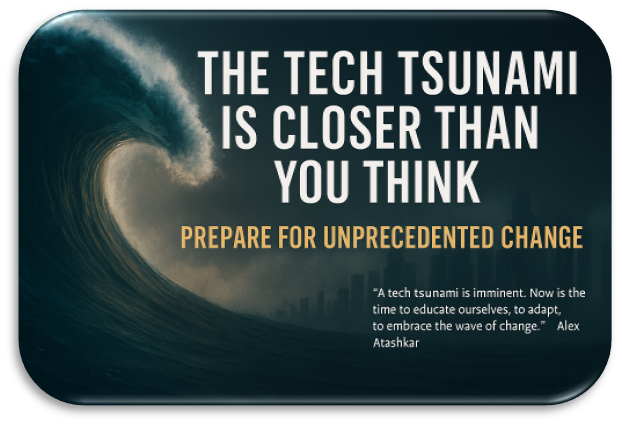
Tech Tsunami: What’s About to Change Everything
Introduction
Hold on tight, folks! We’re standing on the precipice of a tech tsunami, a massive wave of innovation that’s about to reshape everything from how we work and communicate to how we live and even *think*. Forget incremental improvements; we’re talking about fundamental shifts, paradigm changes, and disruptions that will leave some scrambling and others riding the wave to unprecedented heights.
So, what exactly is this tsunami made of? It’s not just one thing, but a confluence of interconnected technologies rapidly maturing and converging: think AI, blockchain, the Metaverse, quantum computing, and advanced robotics, all building upon the ever-accelerating foundation of cloud computing and ubiquitous connectivity. Sounds like a sci-fi movie? Maybe. But the plot is unfolding in real-time, and understanding the key players is crucial for navigating the future.
The Short-Term Ripple Effect
Let’s start with the immediate tremors. In the next few years, expect these changes to become increasingly visible:
- AI-Powered Automation Everywhere: AI isn’t just about chatbots anymore. It’s permeating every industry, automating tasks ranging from customer service and data analysis to complex manufacturing processes. This means increased efficiency and productivity, but also potential job displacement for roles involving repetitive or predictable tasks. Think self-checkout kiosks superseding cashiers, AI writing tools assisting content creators, and robots handling warehouse logistics with superhuman speed and accuracy.
- The Metaverse as the New Frontier: Forget gaming; the Metaverse is evolving into a platform for social interaction, commerce, and even work. We’re seeing early adopters hosting virtual meetings, collaborating on projects in shared digital spaces, and exploring immersive training simulations. While clunky VR headsets are still a barrier, advancements in AR (Augmented Reality) and mixed reality technologies promise a more seamless integration of the digital and physical worlds. Imagine attending a conference in a hyper-realistic virtual venue, trying on clothes virtually before buying them online, or receiving on-the-job training in a risk-free simulated environment.
- Blockchain Beyond Bitcoin: The underlying technology behind cryptocurrencies is finding applications far beyond digital finance. Blockchain’s inherent security and transparency make it ideal for supply chain management, voting systems, digital identity verification, and even securing medical records. This increased transparency and security can build trust, reduce fraud, and streamline processes across industries. Imagine tracking your coffee beans from farm to cup with complete transparency or securely verifying your identity online without relying on centralized databases.
- Hyper-Personalization Becomes the Norm: Big data and AI are combining to create hyper-personalized experiences across every aspect of our lives. From personalized advertising and product recommendations to tailored healthcare plans and customized learning experiences, the future is about catering to the individual. However, this also raises concerns about data privacy and the potential for algorithmic bias, requiring careful ethical considerations and robust regulatory frameworks.
The Long-Term Tidal Wave
Looking further down the line, the tech tsunami promises even more profound and transformative changes:
- The Rise of Autonomous Systems: Self-driving cars are just the tip of the iceberg. We’re talking about autonomous drones delivering packages, robots performing surgery, and AI-powered systems managing entire cities. This level of automation has the potential to revolutionize transportation, healthcare, and urban planning, but also raises critical questions about safety, liability, and the future of work.
- Quantum Computing Unlocks the Impossible: Quantum computing, while still in its nascent stages, promises to solve problems that are currently intractable for even the most powerful supercomputers. This could lead to breakthroughs in drug discovery, materials science, financial modeling, and cryptography. The implications are staggering, potentially ushering in a new era of scientific discovery and technological advancement.
- Human-Machine Collaboration: The future isn’t about humans being replaced by machines, but about humans and machines working together in synergistic ways. AI can augment human capabilities, automate tedious tasks, and provide insights that would otherwise be impossible to uncover. This collaboration will require new skills and competencies, emphasizing creativity, critical thinking, and emotional intelligence.
- The Blurring Lines Between Physical and Digital: As the Metaverse matures and AR/VR technologies become more sophisticated, the lines between the physical and digital worlds will continue to blur. We’ll interact with digital objects and avatars in our everyday lives, attend virtual events that feel as real as physical ones, and seamlessly transition between the two realms. This will have profound implications for social interaction, entertainment, education, and commerce.
Riding the Wave: Solutions and Strategies
So, how do you prepare for this tech tsunami and ensure you don’t get swept away? Here are some practical strategies to help you navigate the future:
- Embrace Lifelong Learning: The most crucial skill for the future is the ability to learn continuously. Identify the technologies that are most relevant to your career or industry and dedicate time to understanding them. Take online courses, attend workshops, and connect with experts in the field. Platforms like Coursera, Udemy, and edX offer a wealth of resources for learning new skills.
- Develop Critical Thinking and Problem-Solving Skills: As AI takes over routine tasks, the ability to think critically, solve complex problems, and make informed decisions will become even more valuable. Practice these skills through games, puzzles, and real-world challenges.
- Cultivate Creativity and Innovation: AI can generate ideas, but it can’t replicate human creativity and imagination. Focus on developing your creative skills through activities like brainstorming, design thinking, and artistic expression.
- Prioritize Ethical Considerations: As technology becomes more powerful, it’s crucial to consider the ethical implications of its use. Engage in conversations about data privacy, algorithmic bias, and the potential for misuse. Support organizations that are working to develop ethical frameworks for AI and other emerging technologies.
- Experiment and Adapt: Don’t be afraid to experiment with new technologies and adapt to changing circumstances. Embrace a growth mindset and be willing to learn from your mistakes.
- Invest in the Right Tools and Infrastructure: Whether you’re an individual or a business, investing in the right tools and infrastructure is essential for staying competitive. This could include upgrading your computer hardware, adopting cloud-based software, or investing in AI-powered solutions.
- Collaborate and Network: Connect with others in your industry to share knowledge, brainstorm ideas, and build partnerships. Attend conferences, join online communities, and participate in collaborative projects.
Examples and Case Studies
- Siemens: Using the Metaverse to design and optimize factories virtually before building them in the real world, resulting in significant cost savings and improved efficiency.
- IBM: Leveraging blockchain technology to track food products from farm to table, ensuring food safety and transparency for consumers.
- Google: Developing AI-powered tools for healthcare, including algorithms that can detect cancer in medical images with greater accuracy than human doctors.
Alternative Approaches
- Focus on Niche Skills: Instead of trying to master every technology, specialize in a niche area where you can become a valuable expert.
- Embrace the Gig Economy: Consider working as a freelancer or consultant, leveraging your skills to provide services to multiple clients.
- Start Your Own Business: Identify a problem that technology can solve and create your own innovative solution.
- Advocate for Responsible Technology Development: Get involved in policy discussions and advocate for regulations that promote ethical and responsible technology development.
Conclusion: A Future Worth Building
The tech tsunami is undoubtedly disruptive, but it also presents a tremendous opportunity. By embracing lifelong learning, developing critical thinking skills, and prioritizing ethical considerations, we can navigate this wave of change and create a future that is more innovative, equitable, and sustainable. The key is to be proactive, adaptable, and optimistic. The future isn’t something that happens *to* us, it’s something we build together. So, let’s get to work, ride the wave, and build a future worth living in!