

The story of computers begins in the early 20th century with pioneering efforts in mechanical calculation. Charles Babbage’s conceptual designs laid the groundwork for the first mechanical computers, such as the Analytical Engine, although it was never completed during his lifetime.
The Rise of Electronic Computers
The mid-20th century saw a pivotal shift with the advent of electronic computers. The ENIAC, developed in the 1940s, marked a significant leap forward, utilizing vacuum tubes for computation. These machines were massive, consuming large amounts of space and power.
Transistors: The Semiconductor Revolution
The 1950s brought the invention of transistors, which replaced bulky vacuum tubes and paved the way for smaller, more efficient computers. This era saw the birth of mainframes and minicomputers, enabling broader access to computing power beyond academia and government.
Microprocessors: The Personal Computer Revolution
In the 1970s, the invention of the microprocessor revolutionized computing. Companies like Intel and Motorola produced integrated circuits that combined CPU functions on a single chip. This breakthrough led to the birth of the personal computer (PC), making computing accessible to businesses and homes worldwide.
From PCs to Laptops and Mobile Devices
The late 20th century saw further evolution with the development of laptops, which provided portability without sacrificing computing power. Meanwhile, advancements in mobile technology in the 21st century led to smartphones and tablets, which integrated computing into everyday life on a global scale.
The Cloud and Distributed Computing
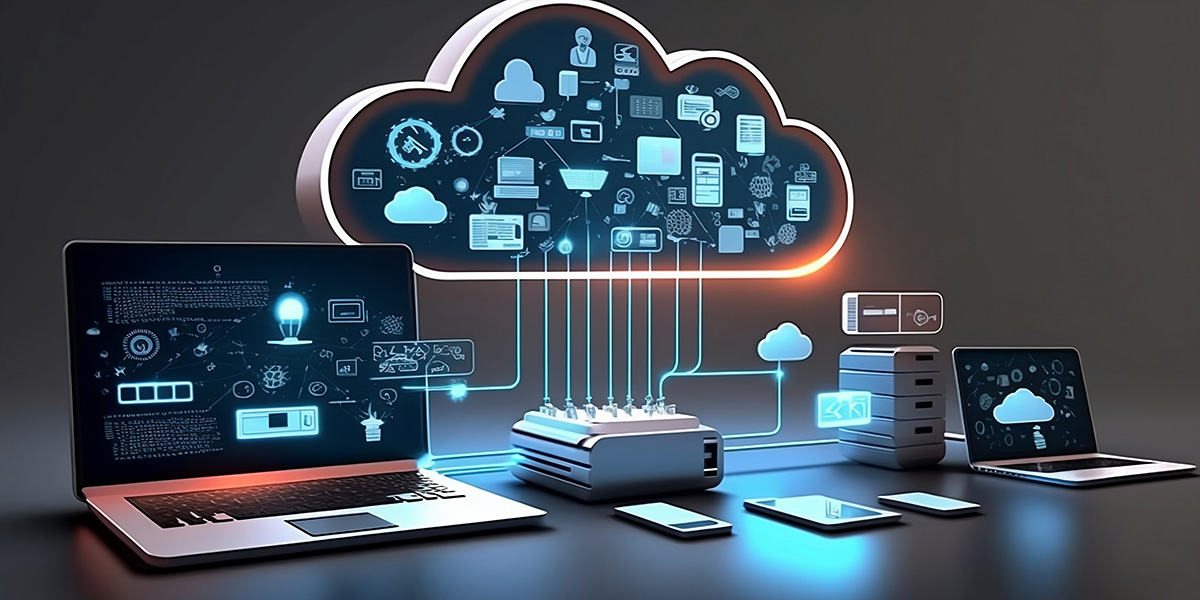
In recent years, cloud computing has emerged as a dominant paradigm, offering scalable storage and computational resources over the internet. This shift has transformed how businesses and individuals manage and access data, reducing the reliance on physical hardware.
Artificial Intelligence and Quantum Computing
Looking forward, artificial intelligence (AI) and quantum computing represent the frontier of computer evolution. AI is revolutionizing industries with machine learning and neural networks, while quantum computing promises unprecedented computational power for solving complex problems.
Conclusion: The Future of Computing
From Babbage’s dreams to quantum computing, the evolution of computers has been a testament to human ingenuity and innovation. Each milestone has brought us closer to faster, smaller, and more powerful machines, transforming the way we work, communicate, and live. As technology continues to advance, the possibilities for computing are limitless, shaping a future where intelligence and processing power redefine what is possible in our digital world.