

Tech Tsunami: What You Need to Know NOW
Introduction
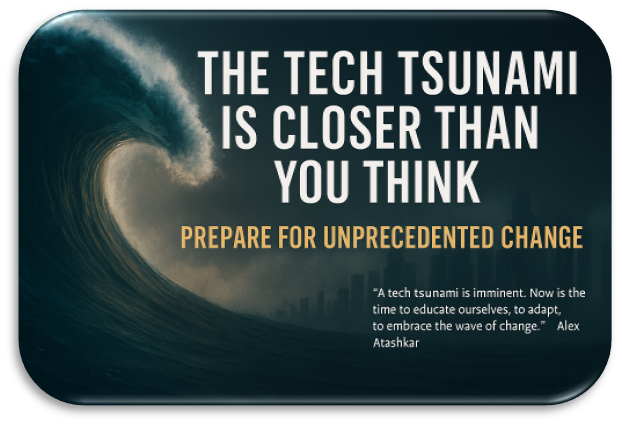
Ever feel like you’re standing on the shore, watching a colossal wave of tech advancements barreling towards you? That’s because, in many ways, you are. We’re in the middle of a full-blown “Tech Tsunami,” and while some might feel overwhelmed, the key is to understand it, prepare for it, and even learn to ride the wave. No, you don’t need a surfboard. You need information, foresight, and a willingness to adapt.
This isn’t just about the latest gadgets or the shiniest new app. This is about a fundamental shift in how we live, work, and interact with the world. Are you ready to dive in?
Short-Term Swells: Immediate Impacts We’re Already Feeling
Let’s be real, the first swells of this Tech Tsunami are already washing over us. Here are a few immediate impacts you’re likely experiencing:
- The AI Arms Race: Artificial intelligence isn’t some far-off sci-fi fantasy. It’s now. From AI-powered writing tools to image generators that can conjure up masterpieces in seconds, AI is already changing the creative landscape. This has huge implications for content creation, marketing, and even education. The short-term impact? Increased efficiency, new possibilities, and the need to quickly learn how to integrate AI into our workflows. But also a sense of anxiety and uncertainty for some roles.
- The Remote Revolution 2.0: Remote work isn’t just a pandemic-era trend; it’s a permanent fixture. But the initial, somewhat chaotic, scramble to “go remote” is evolving. Companies are refining their remote strategies, investing in better collaboration tools, and grappling with the challenge of maintaining company culture in a distributed environment. The short-term effect? A demand for adaptable employees, robust cybersecurity, and innovative solutions for remote team building.
- The Skills Gap Scramble: The Tech Tsunami is creating a widening skills gap. The demand for tech-savvy professionals is outpacing the supply, leaving many organizations struggling to find qualified candidates. This impacts everything from software development to data analytics. The immediate fallout? Increased competition for talent, rising salaries for in-demand skills, and a greater need for continuous learning and upskilling.
Long-Term Depths: The Transformative Impacts on the Horizon
While the immediate impacts are significant, the long-term ramifications of the Tech Tsunami are even more profound. We’re talking about fundamental changes to industries, economies, and even societies:
- The Automation Overhaul: Automation, powered by AI and robotics, is poised to transform virtually every sector. From manufacturing and logistics to customer service and healthcare, repetitive tasks are increasingly being automated, leading to increased efficiency and reduced costs. The long-term consequences? Potential job displacement, the need for workforce retraining programs, and a shift towards roles that require uniquely human skills like creativity, critical thinking, and emotional intelligence.
- The Metaverse Merger: The metaverse, a shared, immersive digital world, is still in its infancy, but its potential is enormous. Imagine attending a virtual conference, collaborating on a design project in a 3D environment, or even undergoing medical training in a simulated operating room. The long-term impact? New forms of social interaction, new opportunities for commerce and entertainment, and a blurring of the lines between the physical and digital realms.
- The Data-Driven Destiny: The amount of data being generated is growing exponentially, and the ability to analyze and interpret this data is becoming increasingly crucial. From personalized medicine to smart cities, data-driven insights are shaping the future. The long-term implications? The need for robust data privacy regulations, the rise of data ethics as a critical field, and the potential for data-driven decision-making to improve everything from healthcare to environmental sustainability.
Riding the Wave: Practical Solutions for Navigating the Tech Tsunami
Okay, so the Tech Tsunami is real. But don’t panic! Here are some actionable solutions to help you navigate these turbulent waters:
- Embrace Lifelong Learning: The single most important thing you can do is commit to continuous learning. Identify the skills that are in high demand and invest in upskilling or reskilling programs. Platforms like Coursera, Udemy, and LinkedIn Learning offer a wealth of online courses that can help you stay ahead of the curve.
- Example: A marketing professional could take courses on AI-powered marketing automation to learn how to leverage AI to improve campaign performance.
- Cultivate Adaptability: The tech landscape is constantly evolving, so it’s essential to be adaptable and willing to embrace change. Cultivate a growth mindset, be open to new ideas, and don’t be afraid to experiment with new technologies.
- Case Study: Consider how businesses adapted during the pandemic by shifting to remote work and online sales. Those that were adaptable thrived, while those that resisted change struggled.
- Focus on Human Skills: As automation takes over more routine tasks, the value of uniquely human skills will only increase. Develop your creativity, critical thinking, communication, and emotional intelligence. These skills are essential for problem-solving, innovation, and collaboration.
- Example: A customer service representative can focus on developing their empathy and problem-solving skills to provide personalized and effective support, even as AI-powered chatbots handle more routine inquiries.
- Build a Strong Network: Connect with other professionals in your field and stay informed about the latest trends and developments. Attend industry conferences, join online communities, and participate in networking events.
- Example: A software developer can join online forums and attend tech conferences to learn about new programming languages and frameworks and connect with potential employers.
- Embrace Ethical Technology: As technology becomes more powerful, it’s essential to consider its ethical implications. Support companies and organizations that are committed to responsible innovation and advocate for policies that protect privacy and prevent bias.
- Example: Consumers can choose to support companies that are transparent about their data collection practices and that prioritize user privacy.
Alternative Approaches: Choosing the Right Path for You
Not everyone needs to become a coding expert or a data scientist. The beauty of the Tech Tsunami is that there are multiple ways to navigate it. Here are a few alternative approaches:
- The Integrator: Focus on learning how to integrate new technologies into your existing workflows and processes. You don’t need to be a technical expert, but you should be able to understand how technology can help you achieve your goals.
- The Translator: Develop your ability to translate complex technical concepts into plain language that non-technical stakeholders can understand. This is a valuable skill in any organization.
- The Curator: Become a curator of information, sifting through the noise and identifying the most relevant and valuable resources for your team or organization.
The Silver Lining: An Optimistic Outlook
The Tech Tsunami may seem daunting, but it also presents incredible opportunities. By embracing lifelong learning, cultivating adaptability, and focusing on human skills, you can not only survive but thrive in this new era. The future is not something to be feared but rather something to be shaped. The technology changes that are occuring open up opportunities to create positive change, innovate, and solve some of the world’s most pressing problems.
So, take a deep breath, embrace the challenge, and start riding the wave. The future is waiting.